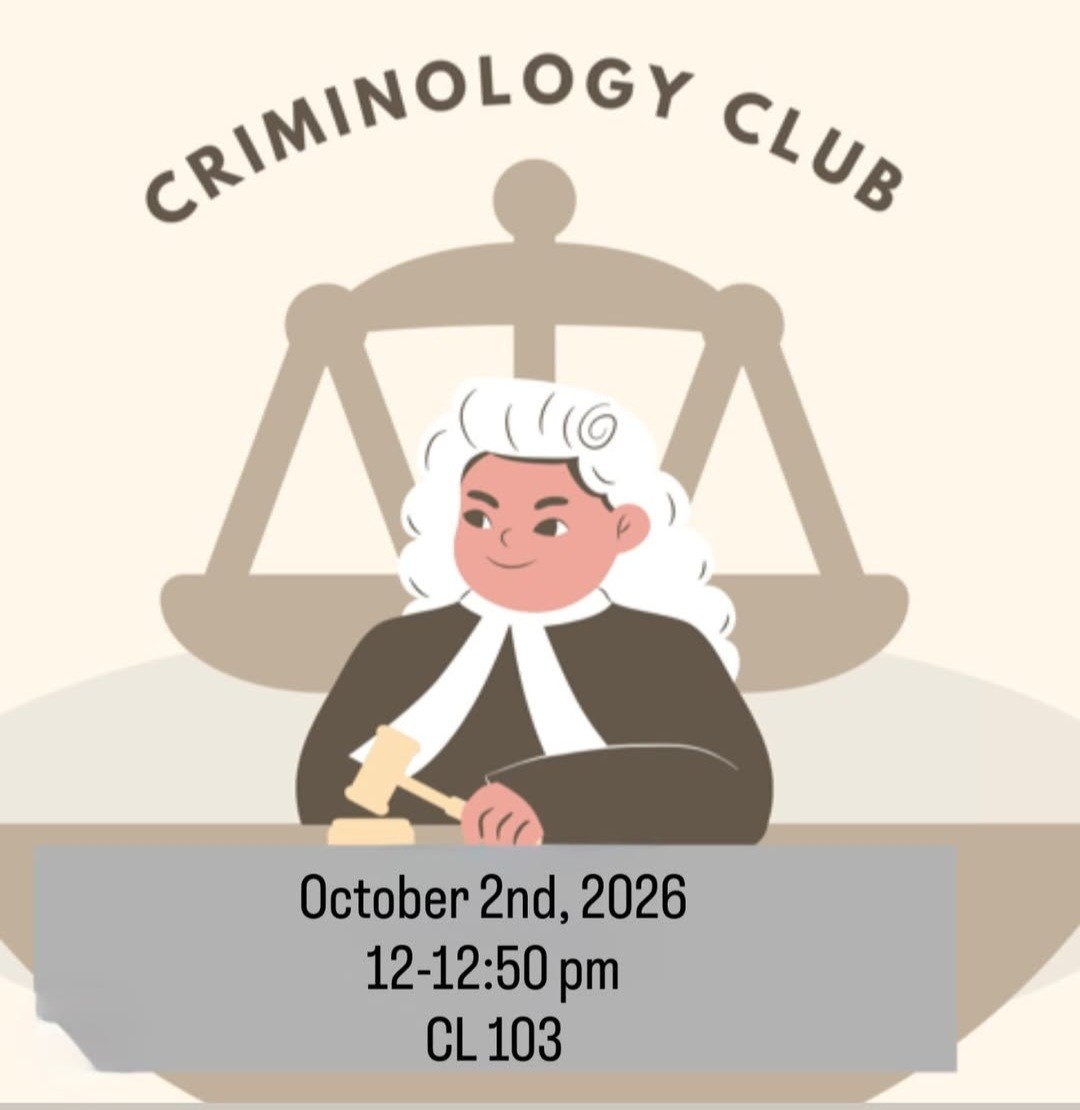

Criminology majors research the relationship between criminal law and social order to understand crime and criminal behavior.
Students majoring in Criminology study the causes of crime and victimization, the behavior of criminals, and the criminal justice system. Criminology strives to understand the nature of crime, as well as the theoretical underpinnings that guide how people are controlled, punished, and rehabilitated. Students have the opportunity to tailor their degree aspirations by choosing between three concentrations (Fraud & Financial Crimes, Justice Studies or Victimology), and through the selection of minors including: victim studies, psychology, sociology, and forensic science.
Criminology Concentrations
Fraud and Financial Crimes
Through the Fraud and Financial Crime cconcentration, students explore how financial crimes are committed, detected, and investigated, while gaining insight into the legal, ethical, and economic impacts these offenses have on individuals, organizations, and communities.
Justice Studies
In the Justice Studies Concentration, the Department of Criminology and Criminal Justice provides students with a detailed understanding of the basic institutions of the criminal justice system. Students in this concentration take courses that detail all components of the criminal justice system, including law enforcement, the courts, and corrections. Stressing effective writing and analytical skills, the program also exposes students to criminological theory and research courses, which help them better understand the complex relationships between individuals, society, and the criminal justice system. This concentration is perfect for students who are interested in pursuing a career in criminal justice or human services. It is also great for students who have a desire to continue to graduate or law school.
Victimology
As one of the only programs in the region to offer a Victimology Concentration, the Department of Criminology and Criminal Justice strives to help prepare future criminal justice and victim service professionals to better understand the impact of victimization and the needs of crime victims. Students in this concentration take courses focusing on the types, scope, and consequences, as well as the resources and services available for victims. This concentration is perfect for students who are interested in pursuing a victim-focused career, such as a victim advocate, counselor, or coordinator at a domestic violence center. It is also great for students who simply have a desire to better serve victims in their future criminal justice professions (e.g., police officer, correctional officer, juvenile probation officer).
 Tracy McDonough